
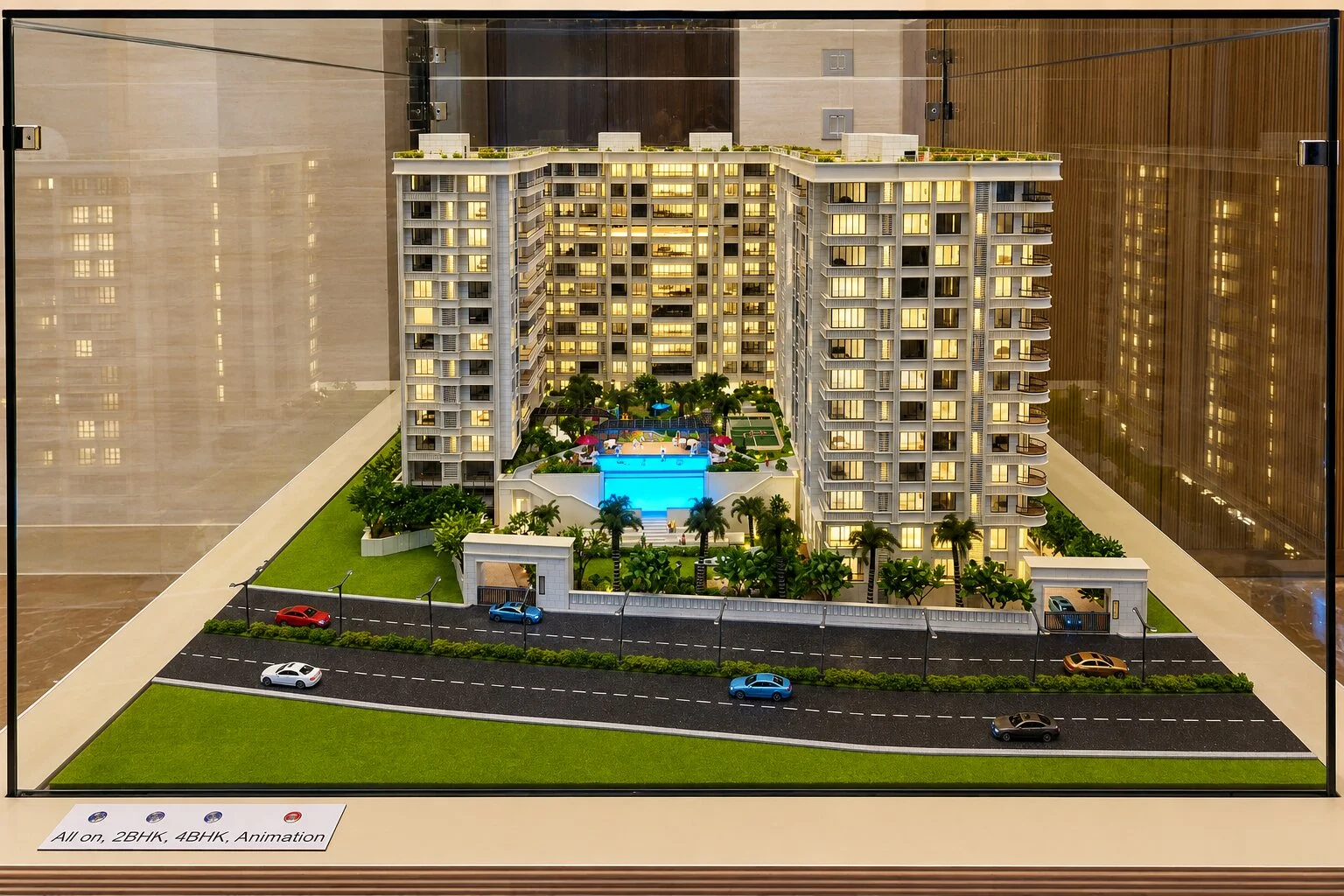

Say “architectural model” and most people picture a glossy tower on a polished base. That’s one kind. There are many others, and each exists for a reason. A rough foam block that helps a student judge proportion is just as legitimate as a lit-up township model in a sales gallery. They simply solve different problems.
Choosing the wrong type is a surprisingly common mistake. People spend money on a highly detailed piece when a quick study would have answered their question, or they present a plain white block to an audience that expected something finished. Knowing the options helps you decide wisely. Here’s a clear tour of the main types of 3d architectural model india and where each one earns its place.
Massing and Concept Models
A massing model is the simplest kind. It uses plain blocks to show the overall volume of a building and its relationship to the site. There are no windows, no facade detail, often no colour. The point is to test ideas about height, bulk and arrangement.
Architects use these early in a project, sometimes making a dozen versions in a week. They’re quick, cheap and honest. Because there’s no decoration, people discuss form and placement rather than finishes. For a client meeting at the concept stage, a massing model on a site base is often more useful than any glossy image.
Site and Context Models
A site model shows the land and its surroundings: roads, neighbouring buildings, trees, levels and boundaries. The project itself might be a simple block or a more detailed piece, but the context takes centre stage.
These models help in planning and approvals. They show how a new building affects light, views and traffic, and they help officials and neighbours understand impacts. When the terrain is complex, such as a hillside or a riverfront, contour layers make the slope easy to read at a glance.
Presentation Models
This is the type most people picture. A presentation model is finished carefully, with accurate facades, proper materials, landscaping and sometimes lighting. It’s meant to impress and to explain, and it’s commonly used for sales, investor meetings, competition juries and exhibitions.
Quality counts a lot here. People judge the project partly by the care shown in the model, whether they realise it or not. A well-built 3d architectural model india of this kind can stand for years in a reception or gallery, so it’s worth choosing durable materials and a good display base.
Sectional and Cutaway Models
Sometimes the inside matters more than the outside. A sectional model slices through a building to reveal floors, stairs, structure and spatial relationships. A cutaway might lift a roof or remove a wall to show a layout.
These are valuable for complex buildings like hospitals, auditoriums, museums and multi-level transport hubs, where understanding how spaces connect is central to the design. They also help in teaching, because students can see how structure and function work together.
Interior Models
Interior models focus on a single room or a small group of rooms, usually at a large scale such as 1:20 or 1:25. They show furniture, finishes, lighting and colours, and they let designers test layouts and moods.
Hotel suites, show flats, restaurants and retail stores are common subjects. Clients often find it easier to approve an interior after seeing it in miniature, because they can look through the open top and imagine standing inside.
Structural and Working Models
Structural models show how a building stands up. Frames, trusses, cores and foundations are made visible, sometimes with load-bearing tests. Engineers use them to explain ideas to clients, and students use them to learn how forces travel.
Working models include moving elements such as sliding facades, rotating floors or retractable roofs. They can also demonstrate environmental ideas like airflow, daylight or shading, using simple lamps and sensors. These are more specialised and usually cost more, yet they communicate ideas that no static model can.
3D Printed Versus Handcrafted Models
Both methods have strengths. Printing handles unusual curved shapes, repeated parts and very fine detail with consistency. It’s especially good for sculptural facades and complex roofs. Handcrafted work using cut and assembled materials excels at larger flat surfaces, crisp edges and natural landscapes.
Most professional pieces combine the two. A tower may have a laser-cut core, a printed crown and hand-painted finishing. The sensible question isn’t which method is better, but which combination gives the clearest result within your budget.
Choosing the Right Type for Your Needs
A few questions can guide you. At what stage is the design? Early designs suit massing or study models. Final designs suit presentation models. Who’s your audience? Technical audiences may value sections and structure, while buyers want atmosphere and landscaping. Where will it be shown, and for how long? Short events can use lighter materials. Permanent display demands tougher ones that hold up over the years.
Think about budget honestly. Many projects work well with two or three modest models at different stages instead of one expensive masterpiece. A simple study model during design and a polished model for launch often give better value than one over-detailed piece trying to do everything.
Lighting, Colour and Texture Considerations
Whatever the type, the finishing touches shape the viewer’s response. Light can turn an ordinary model into a story, with warm windows glowing against a dark base. Colours work best when limited to a considered palette. Textures, from brushed metal to smooth acrylic, add richness without clutter.
White models carry a particular charm. They remove distraction and highlight form, which is why architects love them for competitions. Coloured and textured models, on the other hand, communicate material choices and mood, which suits client presentations and sales.
Where Each Type Fits in a Project Timeline
Think of a project as a sequence. During early sketches, quick massing and site models test ideas. As the design firms up, a detailed study model checks proportions, facade rhythm and openings. Just before approvals or fundraising, a presentation model communicates the finished concept. After construction begins, sectional and interior models help explain specific areas to buyers or tenants.
Mapping models to stages helps you plan the budget. Rather than ordering everything at once, you can spread the cost, and you avoid spending heavily on a model for a design that’s still moving.
Models for Different Audiences
Different people read models differently. Engineers and planners look for accuracy of heights, setbacks and structure. Investors look for scale, confidence and the sense of a well-run project. Buyers look for light, greenery and a feeling of comfort. Students and juries look for clarity of idea.
Before you commission anything, picture the person standing in front of it. What do they know already, and what do they need to feel? A model aimed at that person, rather than at everyone, will almost always work harder.
Care, Storage and Reuse
Whatever type you choose, think about its life after the first presentation. Smaller study models can be stored in boxes for future reference. Presentation pieces need covers, a stable base and a quiet corner away from sunlight. If a model has lights, keep the power adapter and instructions together. Consider photographing it carefully on delivery, since clean photographs become useful for brochures, award entries and portfolios long after the physical piece has aged.
Mistakes People Make When Choosing a Type
The most frequent error is ordering a presentation model too early, before the design settles. When the project changes, an expensive piece becomes obsolete. The opposite also happens: a team shows a rough study block to a client who expected a finished product, and confidence drops. A third mistake is ignoring the display space, which leads to a large model squeezed into a small room.
Another quiet problem is asking one model to do too many jobs. A single piece rarely suits an engineer, a buyer and a planning officer equally well. Sometimes two smaller models, each with a clear purpose, communicate better and cost about the same as one overloaded piece. Ask your maker for an honest opinion on this. A good one will tell you when less is the smarter choice.
A Final Word on Budget and Expectations
Set expectations before the first quote arrives. A quick study model can come together in days, while a lit presentation model with hand-finished landscaping needs weeks. Neither is better in absolute terms. They answer different questions at different moments, so match the type to the moment and you’ll rarely feel your money was misspent.
Final Thoughts
There’s no single best kind of model. The right choice depends on your design stage, your audience, your budget and the message you need to deliver. A study block, a handsome presentation piece and a working demonstration model are tools, each suited to a particular job.
When you plan your next project, sit down with your maker and talk through these options before you decide. Describe your goals, share your drawings and listen to their suggestions. A thoughtful partner in 3d architectural model india will help you pick the type that clarifies your idea instead of just decorating it, and that’s what makes a model worth building.